Manual configuration
Getting Started
You might want to manually configure your BigCommerce Integration if you're an Enterprise customer and are running Falcon Server Locally.
If you're using our example app, demo-v2 most of the heavy lifting will be done for you and you'll only need to add a few configurations.
1. Create a BigCommerce Account
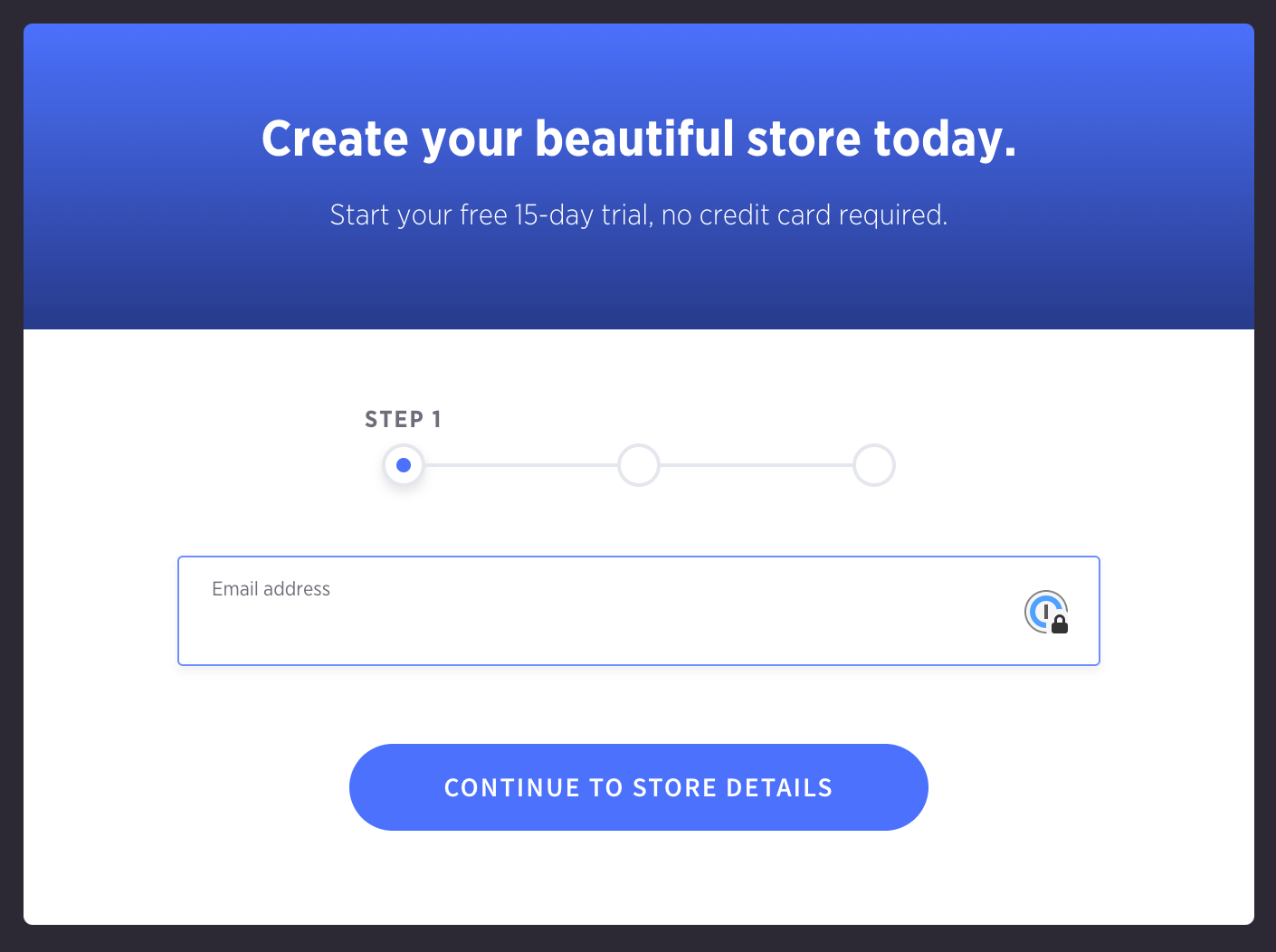
You can create an account and start your free trial here
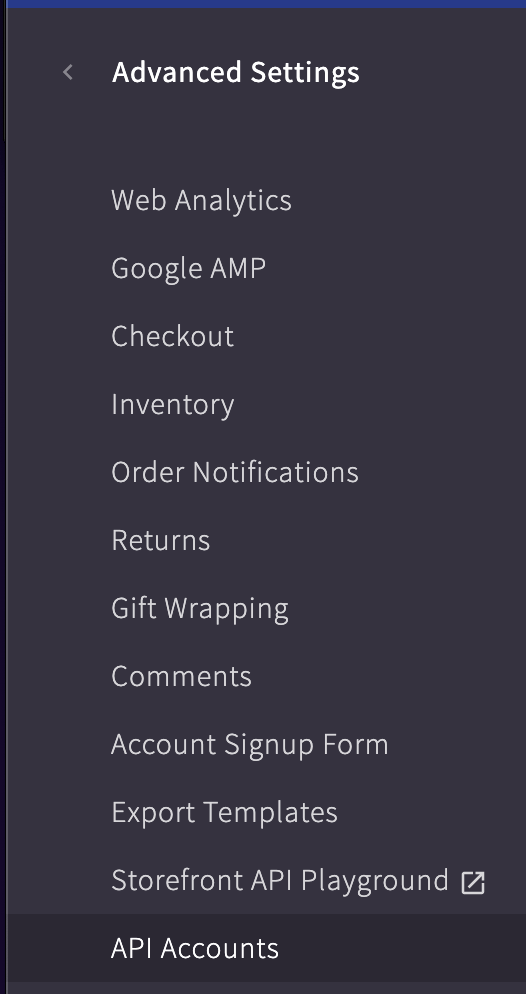
Once you've created an account, or if you already had one you'll need to create API keys. From within your dashboard visit Advanced Settings -> API Accounts.
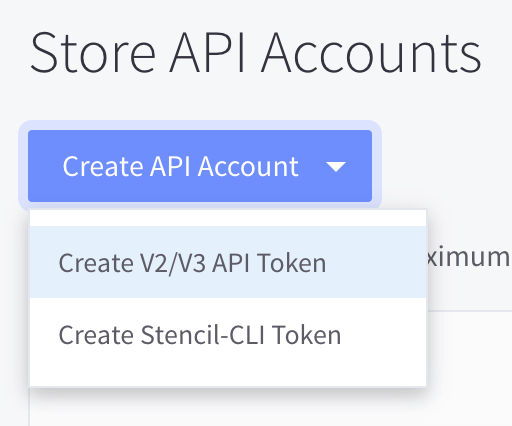
You should then be able to create a V2/V3 API Token.
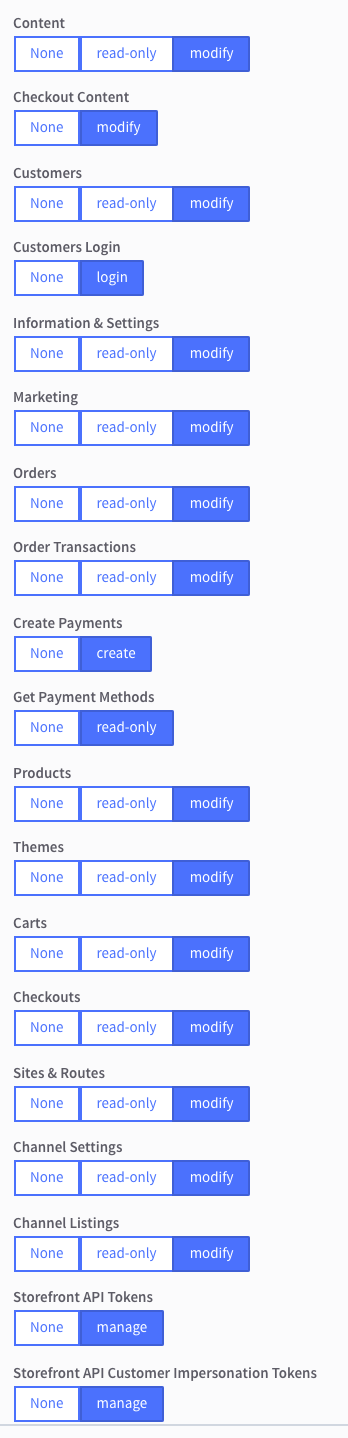
We recommend enabling all permissions for you API so you don't have to regenerate it at a later date.
You will then get a download with your API keys. Keep this safe as you won't be able to generate it again. We recommend storing this information in a secure password manager such as 1password.
You should get the following credentials:
- ACCESS TOKEN
- CLIENT ID
- CLIENT SECRET
- NAME
- API PATH
Your Store hash
From your API Path you will be able to get your Store Hash.
If you API Path is https://api.bigcommerce.com/stores/abcdefg123/v3/ then your Store Hash is abcdefg123. You will need this later.
Your Store url
You'll also need your stores frontend URL. This is simply the URL you visit to see your store. It will look something like https://test-store.mybigcommerce.com/
GraphQL Token
Your GraphQL Token has to be generated. Luckily BigCommerce has a request runner in their docs that allow you to generate a token.
GraphQL Url
This will be your store URL with graphql at the end. e.g. https://test-store.mybigcommerce.com/graphql.
2. Configure BigCommerce
The default configuration for BigCommerce looks like this:
server/config/default.json
"endpoints": {
  "bigcommerce": {
    "package": "@deity/falcon-bigcommerce-endpoints",
    "config": {
      "protocol": "https",
      "host": null,
      "accessToken": null,
      "clientId": null,
      "clientSecret": null,
      "url": "/bc/webhook",
      "webhookBaseUrl": null
    }
  }
},
"apis": {
  "bigcommerce": {
    "package": "./src/falcon-custom-bc-api",
    "config": {
      "protocol": "https",
      "paymentHost": null,
      "host": null,
      "accessToken": null,
      "clientId": null,
      "clientSecret": null,
      "gqlUrl": null,
      "gqlToken": null,
      "frontendUrl": "http://localhost:3000",
      "mailerComponent": "mailer",
      "paymentsComponent": "payments"
    }
  }
}
Use your server/config/local.json or your environment variables (Deity Cloud) to add the sensitive data where needed.
"endpoints": {
  "bigcommerce": {
    "config": {
      "host": "api.bigcommerce.com/stores/[STORE_HASH]",
      "accessToken": "[ACCESS_TOKEN]",
      "clientId": "[CLIENT_ID]",
      "clientSecret": "[CLIENT_SECRET]"
    }
  }
},
"apis": {
  "bigcommerce": {
    "config": {
      "paymentHost": "payments.bigcommerce.com/stores/[STORE_HASH]/",
      "host": "api.bigcommerce.com/stores/[STORE_HASH]",
      "accessToken": "[ACCESS_TOKEN]",
      "clientId": "[CLIENT_ID]",
      "clientSecret": "[CLIENT_SECRET]",
      "gqlUrl": "[STORE_URL]/graphql",
      "gqlToken": "[GRAPHGL_TOKEN]"
    }
  }
}
Deity Cloud Environment Variables
BIGCOMMERCE_HOSTBIGCOMMERCE_ACCESS_TOKENBIGCOMMERCE_CLIENT_IDBIGCOMMERCE_GQL_URLBIGCOMMERCE_GQL_TOKENBIGCOMMERCE_FRONTENT_URLSEARCH_API_NAME: If you want to use BigCommerce for search the value shoul bebigcommerceCHECKOUT_USE_EMBEDDED: If you want to use the embedded checkout.